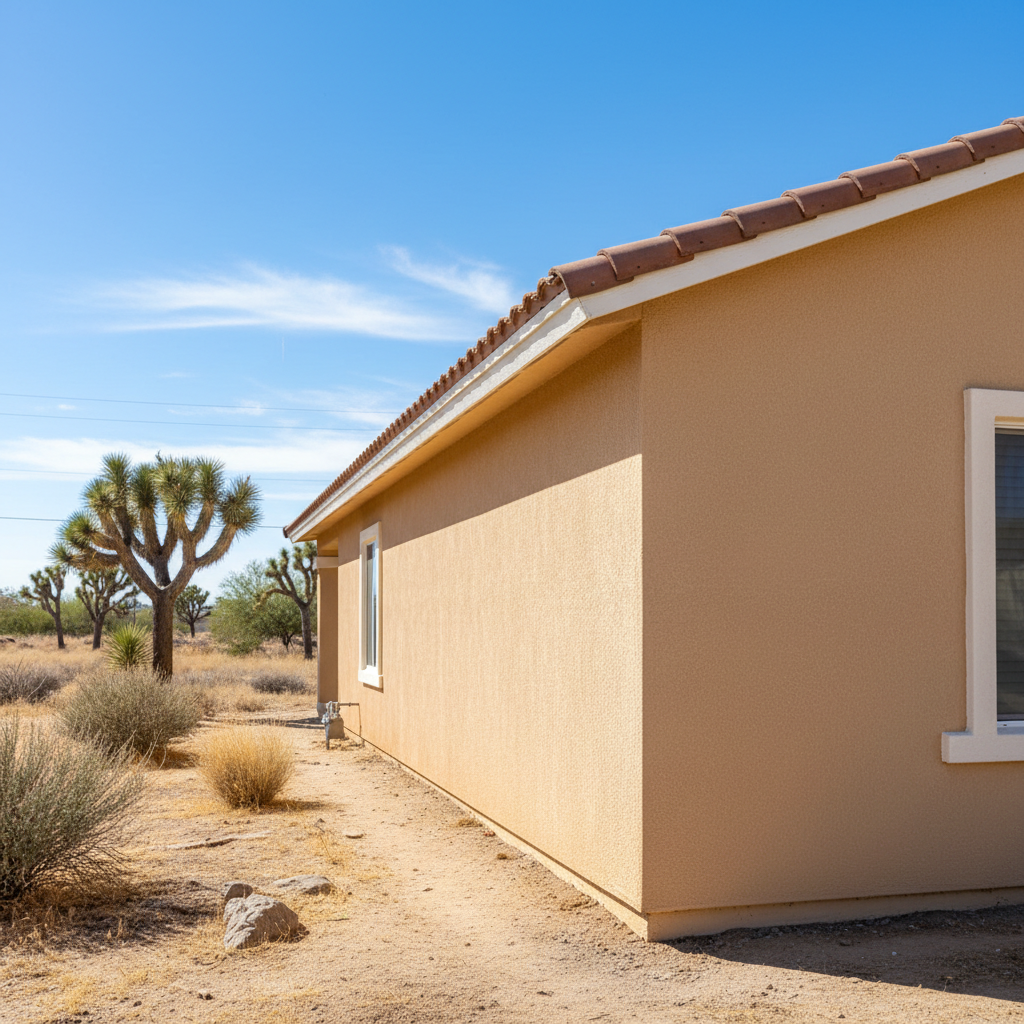
Protecting Your Painted Stucco Investment
You just put money into a fresh coat of paint for your stucco home right here in Palmdale. Maybe you picked a classic desert tan, or perhaps something bolder to really pop in a newer spot like Ritter Ranch. Whatever your choice, you want that paint job to last, don't you? It's not just about looking good from the street; a good paint job actually protects your stucco, and your stucco, in turn, protects your home. Here's what I tell my clients about keeping that paint looking sharp for as long as possible.
First off, the biggest enemy to paint in our part of the world is the sun. We get a lot of it, and it's intense. UV rays break down paint pigments and binders over time, which leads to fading and that powdery chalking. That's why using high-quality, 100% acrylic elastomeric paint is so important from the get-go. If Palmdale Stucco & Plastering did your painting, you know we only use the good stuff — paint designed to handle our extreme temperatures and dry air. But even the best paint needs a little help, you know?
Regular Maintenance: Simple Steps, Big Impact
Keeping your painted stucco in great shape isn't rocket science, but it does need a bit of attention. Think of it like washing your car – you wouldn't let it go for years without a rinse, would you?
Annual Cleaning: This is probably the most important thing you can do. Dust, dirt, and even the occasional grime from those windy days we get can really build up. Grab a soft brush and a garden hose to gently wash down your stucco. For tougher spots, a mild detergent (like dish soap) mixed with water and a soft sponge works wonders. Just make sure to rinse everything really well. Try to avoid high-pressure washers unless you truly know what you're doing and keep it on a very low setting; too much pressure can damage the paint or even the stucco itself.
Check Your Gutters and Downspouts: This might seem like it has nothing to do with it, but clogged gutters can cause water to overflow and run right down your stucco. That leaves streaks and can even cause moisture problems. So, make sure they're clear, especially after a rare heavy rain.
Trim Shrubs and Trees: Any plants touching your stucco can trap moisture, rub against the surface, and even transfer mildew or dirt. Keep them trimmed back a few inches from the wall.
Sealant Checks: Take a look at the caulking around your windows, doors, and any spots where things poke through, like dryer vents or utility lines. These sealants are your first line of defense against water getting behind the stucco. If you see cracks or gaps, re-caulk them right away with a good quality exterior sealant.
Warning Signs: Don't Ignore These
Your stucco will usually give you clues when something's not quite right. Catching these problems early can save you a ton of hassle and money down the road.
Fading and Chalking: This happens a lot, especially on walls that face south. If you rub your hand on the stucco and get a powdery residue, that's chalking. It means the paint is starting to break down. A little bit is normal after many years, but excessive chalking or really noticeable fading means your paint's protective qualities are diminishing.
Cracks: Hairline cracks are pretty normal in stucco because of our temperature changes and seismic activity. But if you see cracks wider than a credit card, or if they're spiderwebbing, running diagonally from window corners, or showing signs of moisture, that's a red flag. Water can get into these larger cracks and cause bigger problems.
Peeling, Blistering, or Bubbling Paint: This is a clear sign of water getting in. Water is finding its way behind the paint, causing it to lose its grip. Don't just paint over it; you need to find the source of the moisture first.
Discoloration or Stains: Dark streaks, green patches, or rust-colored stains can point to mold, mildew, or water leaks. Pay close attention to areas below windows, near the roofline, or around spigots.
Efflorescence: This looks like a white, powdery, or crystalline deposit on the stucco surface. It's mineral salts leaching out from inside the stucco or masonry, carried by moisture. It's a definite sign of water getting in and needs to be dealt with.
When to Call a Professional
Look, I'm all for homeowners tackling DIY projects, but some things are just better left to the pros. When it comes to your stucco, especially if you see any of the more serious warning signs, don't hesitate to call someone experienced.
Extensive Cracking or Damage: If you've got large cracks, holes, or sections of stucco that sound hollow when you tap them, you're looking at more than just a paint job. You might have structural stucco damage or water damage that needs proper repair before any repainting.
Persistent Moisture Issues: If you've got peeling paint, efflorescence, or mold that keeps coming back, even after cleaning, you definitely have a water problem that needs an expert to diagnose. Finding the source of a leak can be tricky, and a professional knows what to look for.
Major Repainting Project: When it's time for a full repaint (usually every 10-15 years, depending on the paint quality and how much sun it gets), it's a big job. Proper surface preparation is absolutely key to a long-lasting finish, and that includes cleaning, patching, and priming. A professional painter will make sure the job gets done right, protecting your investment for another decade or more.
Unexplained Stains or Discoloration: If you can't figure out why a particular area of your stucco is stained or discolored, a professional can often pinpoint the cause and recommend the right fix.
Your home is a big investment, and its exterior is its first line of defense. A well-maintained, properly painted stucco finish doesn't just look good; it protects your home from the elements. Keep an eye on it, do the simple maintenance, and don't be afraid to call Palmdale Stucco & Plastering if you spot something that needs a closer look. We're here to help keep Palmdale homes looking their best.