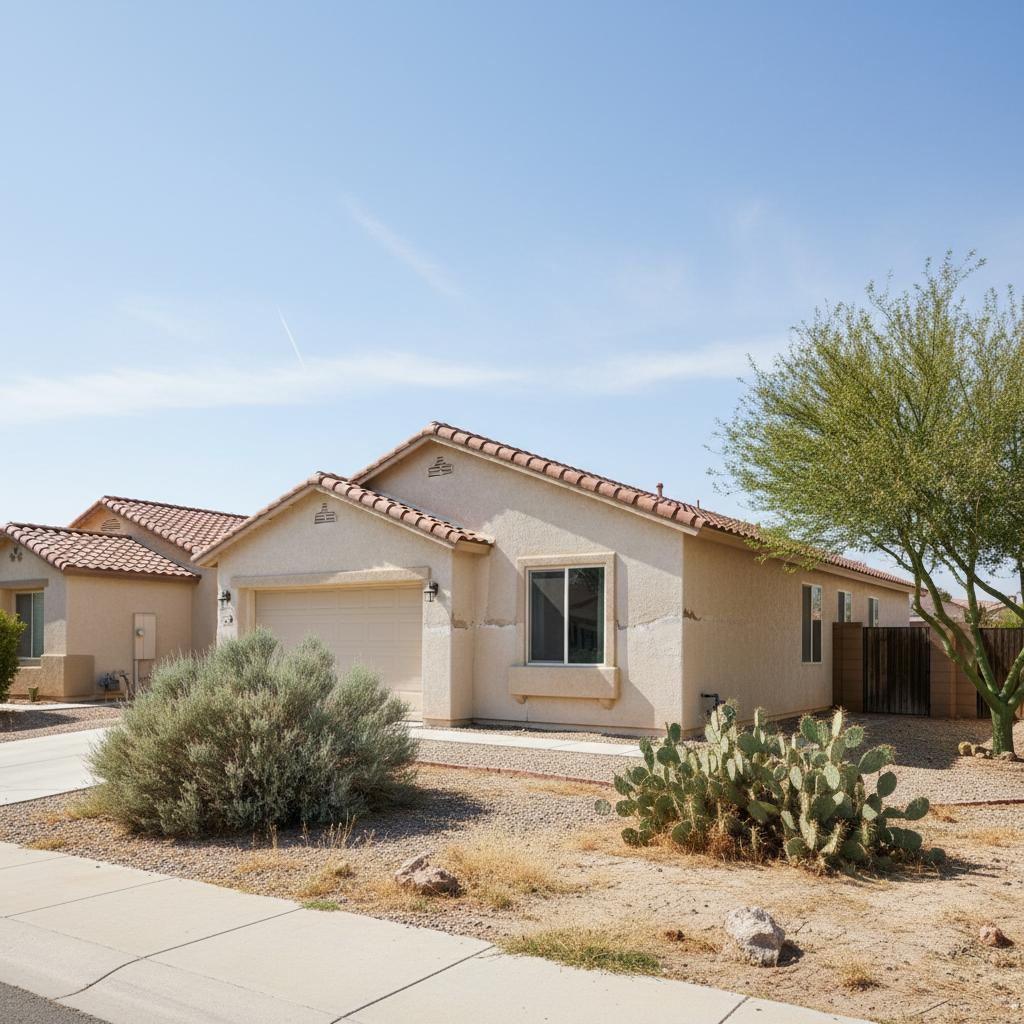
You've seen them, right? Those little hairline cracks, maybe some bigger spiderweb patterns, or even chunks missing from the stucco on your Palmdale home. It's easy to think, "Oh, it's just old," or "I'll get to it eventually." But I'm telling you, as someone who's fixed more stucco than I can count across this valley, those cracks are often telling a story, and you really need to listen.
Why Stucco Cracks Happen Here in Palmdale
First off, let's talk about why stucco cracks in the first place, especially around here. We've got some pretty unique conditions in Palmdale that truly put stucco to the test. Think about our crazy temperature swings – it can be freezing cold at night in winter and then baking hot during the day. That constant expansion and contraction of materials, day in and day out, year after year, is tough on any building material. Stucco is no exception.
Then there's the sun. Our Palmdale sun is relentless. It bakes everything, drying out materials and making them brittle. I've seen homes in older neighborhoods, like the ones off Palmdale Blvd near the 14, where the stucco on the south-facing walls just takes a beating. It gets dry, loses its flexibility, and then, boom, cracks start appearing.
Another big factor is settlement. We're in an active seismic zone, and while we don't always feel big quakes, the ground is always moving a little. Plus, the soil conditions here can vary quite a bit. Some areas have more expansive clay soils that can swell and shrink with moisture changes, putting stress on foundations and, consequently, your stucco. If your house settles even a little unevenly, that stress has to go somewhere, and often, it shows up as cracks in the stucco.
Not All Cracks Are Created Equal
Now, not every crack means your house is falling apart. Some hairline cracks are just normal shrinkage cracks in the stucco finish coat. They're usually pretty shallow and don't go all the way through the material itself. We can usually patch those up pretty easily, color match, and you're good to go.
But then you've got the more serious stuff. Diagonal cracks, especially around windows and doors, can indicate structural movement. If you see cracks wider than a credit card, or if they're running horizontally or vertically for long distances, you've got a bigger problem on your hands. These aren't just cosmetic; they're open invitations for water to get behind your stucco.
The Real Danger: Water Intrusion
And that's where the real trouble starts. Once water gets behind your stucco, it can cause all sorts of damage. It can rot the wood sheathing and framing underneath, lead to mold growth, and even compromise the structural integrity of your home. I've seen homes where what started as a small, ignored crack turned into thousands of dollars in repairs because water had been seeping in for years, completely unnoticed.
Especially with our occasional heavy rains, like we've had lately, those small openings become big problems fast. The water gets in, but it can't get out easily, so it just sits there, doing damage.
Why Local Expertise Matters for Stucco Repair
This is why you can't just hire any handyman for stucco repair, especially not in Palmdale. You need someone who understands our local conditions. Someone who knows how our climate affects stucco, what kind of soil we're dealing with, and what building practices are common around here.
When we at Palmdale Stucco & Plastering come out for a repair, we're not just patching a crack. We're looking at the whole picture. We're trying to figure out why that crack formed. Is it just surface wear and tear? Is there a drainage issue? Or is there a problem with the underlying framing or foundation? We'll assess the extent of the damage, make sure there's no hidden water damage, and then recommend the right repair method.
Sometimes it's a simple patch and blend. Other times, we might need to cut out a larger section, repair the substrate, and then re-stucco. The goal isn't just to make it look good, but to make sure the repair lasts and prevents future problems. We use materials and techniques designed to stand up to our desert environment.
Don't let those cracks get worse. If you're seeing issues with your stucco, it's always better to get it checked out sooner rather than later. A small repair now can save you a huge headache and a lot of money down the road.